
1. What Mindfulness Means in Early Childhood
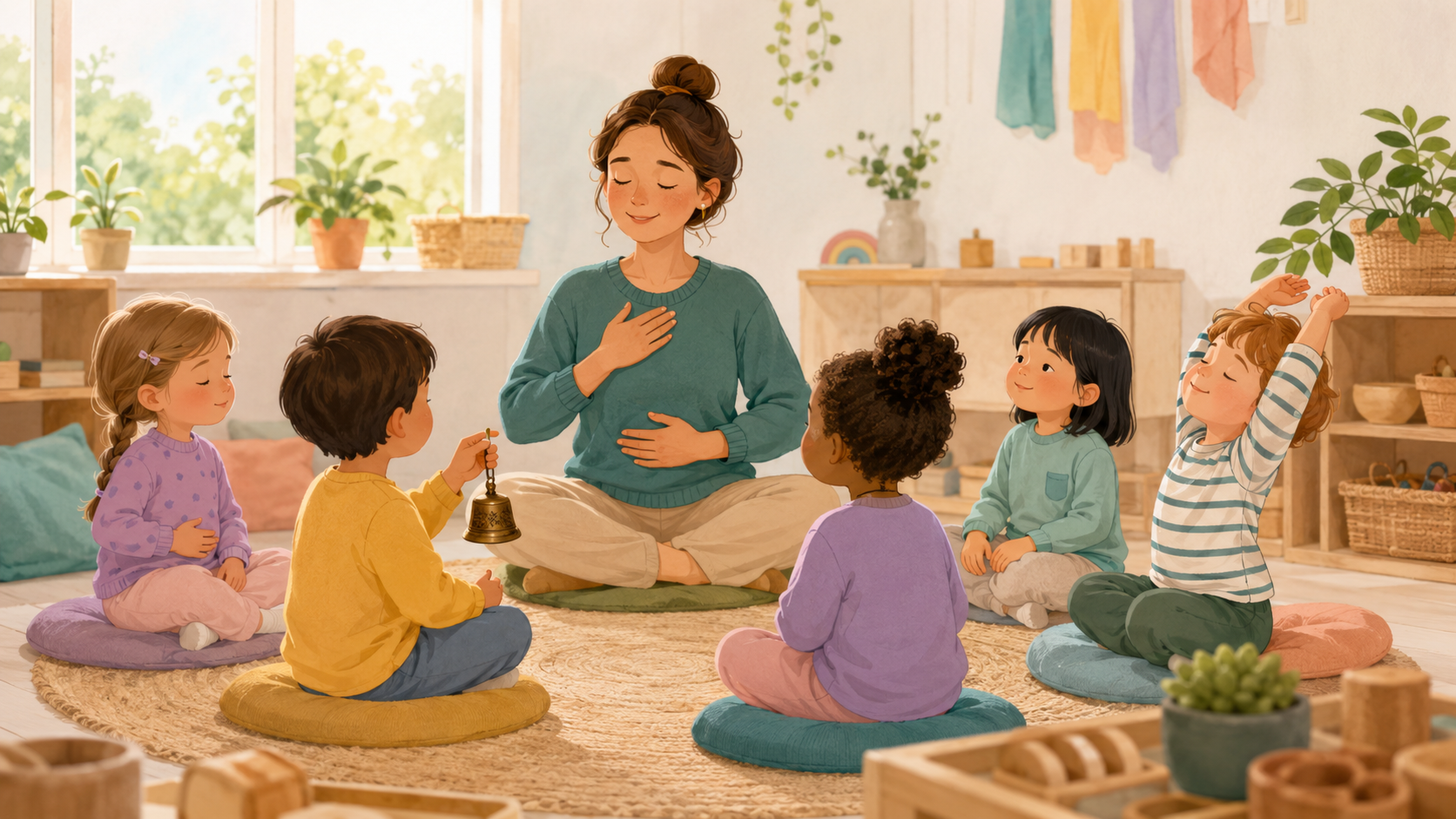
In early childhood education, mindfulness means helping children notice what is happening now – their breathing, bodies, emotions, movement, sounds and surroundings – through simple and playful experiences. It is not long meditation, perfect silence or an expectation that young children remain still.
Relaxation aims primarily to calm the body. Mindfulness also develops awareness and attention. A child may therefore practise mindfulness while stretching slowly, listening for a sound, noticing a texture or naming a feeling.
2. Why It Matters
3. The Teacher as a Calm Model
Children learn regulation not only from instructions but from the pace, tone and emotional presence of adults. Speak slightly more slowly, model the action, leave a pause after each instruction and accept different forms of participation.